
The United Nations observes World Water Day yearly on March 22. The theme of World Water Day 2026 is Water and Gender.
WTNFN’s Brief to the Study of Freshwater in Canada
In 2024, We the Nuclear Free North recognized World Water Day by submitting a brief to the Standing Committee on Environment and Sustainable Development’s Study of Freshwater in Canada.
The brief emphasizes the dangers to safe water posed by the nuclear industry’s (NWMO’s) proposed deep geological repository for all of Canada’s nuclear fuel waste, east of Dryden in northwestern Ontario.
We the Nuclear Free North also provides details regarding the risk to safe water here on our website – for instance, in our “debunker” Is Surface Water Safe from Contamination from a Deep Geological Repository? No.
Chi miigwetch to the Anishinaabe Water Walkers, who teach that “water is life” (Niibi Bimaadiziwin).
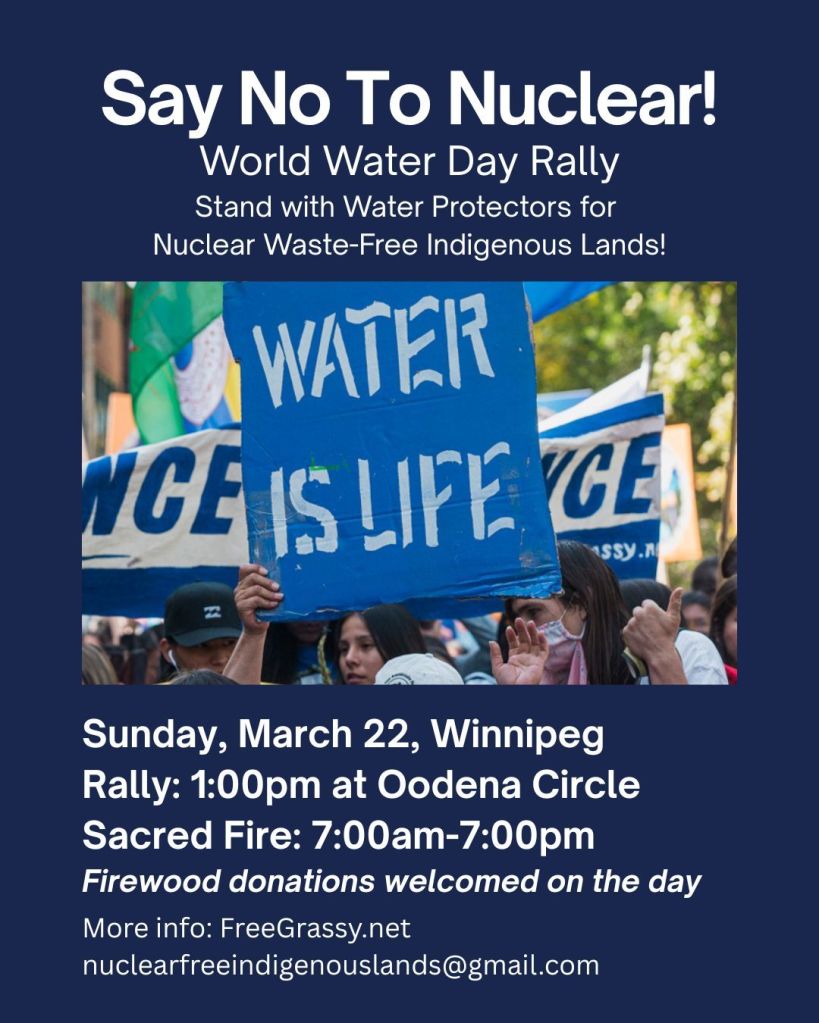
March 22, 2026 Event in Winnipeg
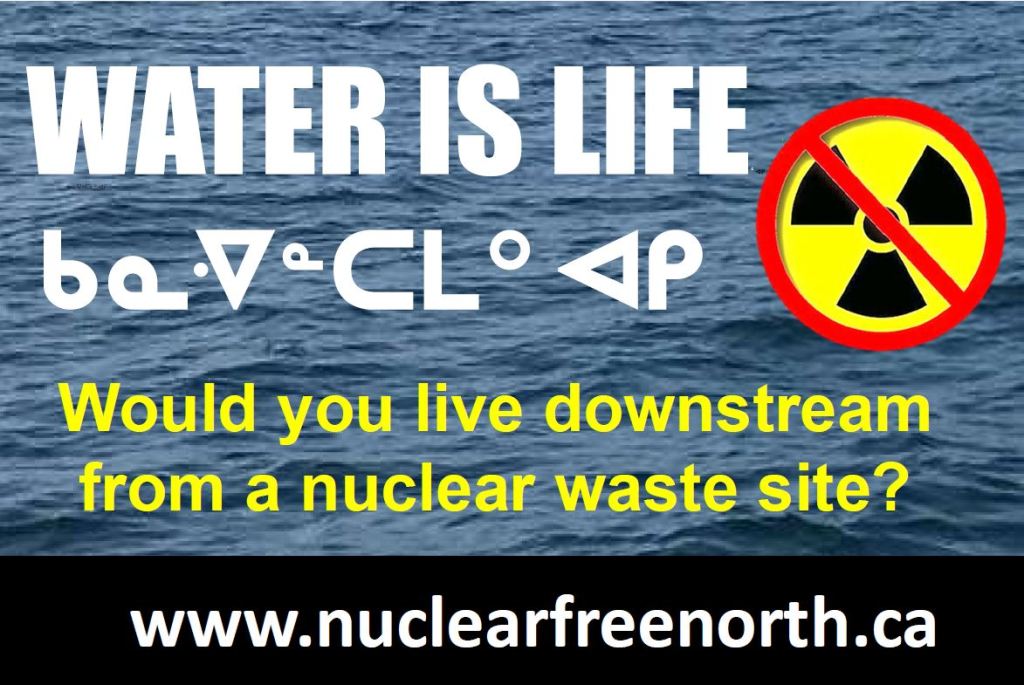
On World Water Day 2026, Grassy Narrows Solidarity invites all water protectors to a rally at The Forks in Winnipeg. Say No to Nuclear!
Other World Water Day Events
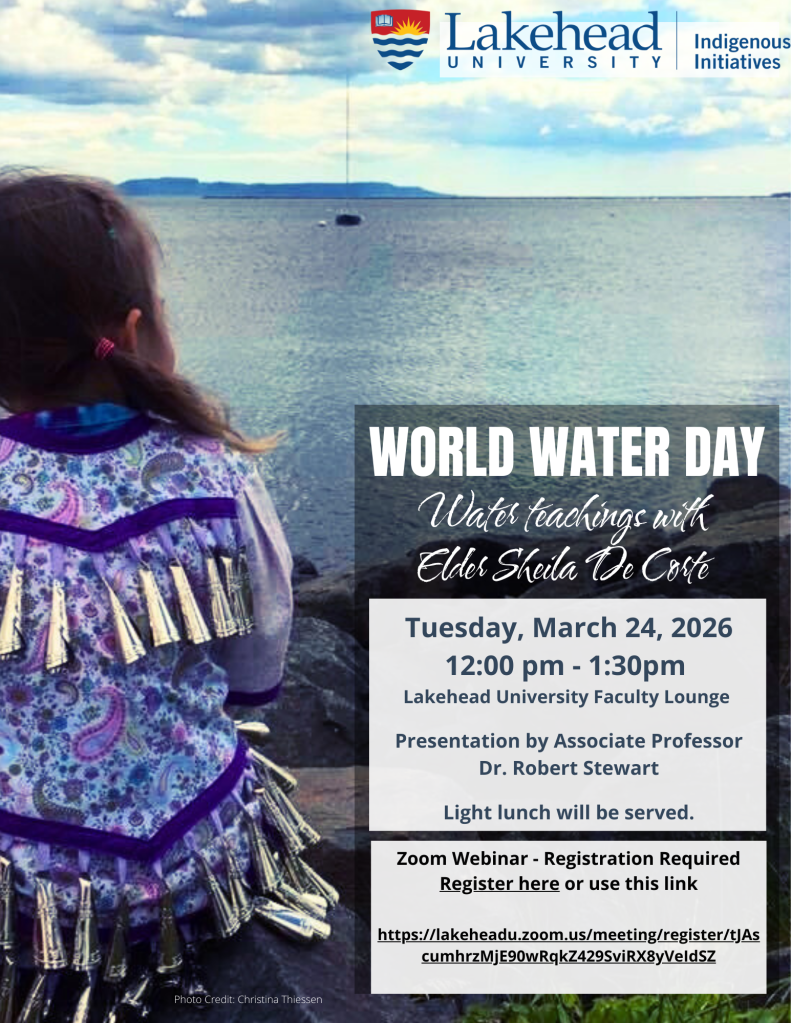
World Water Day – Lakehead University (Thunder Bay Campus) Indigenous Initiatives
Water Teachings with Elder Sheila DeCorte
Tuesday, March 24, 2026 – 12:00pm to 1:30pm EDT, at Lakehead University’s Faculty Lounge
This event will be in-person but will also be live-streamed.
If attending virtually, please register here: https://lakeheadu.zoom.us/webinar/register/WN_XWD3O4TBR3CDyt_RhXzhTQ
For more information, contact Stacey Pawluk at admin.ii@lakeheadu.ca.
Generational Radiation Impact Project
The United Nations selected the theme of “Water and Gender” for World Water Day 2026 to emphasize gender equality as one of the social benefits that can arise when the burden of water insecurity is lifted from a community.
For us in North America/Turtle Island who are concerned about radioactive contamination of water from nuclear facilities, “Water and Gender” has additional significance. Exposure to radioactive contamination has disproportionate effects on people of different ages and genders, with women and girls at significantly greater risk of injury than men. For more information, and to help support research, visit the webpage of the Generational Radiation Impact Project.
To join the We the Nuclear Free North email list,
visit tinyurl.com/WTNFN-sign-up.
 We the Nuclear Free North